Wild Camping in England: What Is Actually Legal?
Wild Camping in England: What Is Actually Legal?
Ask three wild campers in England where you may legally pitch a tent and you will get three different answers, each delivered with total confidence. One will say Dartmoor is fair game, another that the Lake District tolerates it above the intake walls, a third that it is all trespass and you will be shifted by a farmer at dawn. There is a grain of truth in every version. The reality sits somewhere between a blanket ban and the freedom people imagine.
The short answer: there is no general right to wild camp in England
In England and Wales, camping on land without the owner's permission is trespass. Trespass is a civil matter rather than a criminal one, which is why the police are rarely involved and why the flat claim that "wild camping is illegal" is not quite right either. You are not committing a crime by sleeping on a hillside; you are simply outside your rights, and if the landowner asks you to leave, you have to go.
The confusion usually traces back to the Countryside and Rights of Way Act 2000. Its right of access opens up large areas of mountain, moor, heath and down for walking and other open-air recreation, but camping is explicitly excluded. Open access land on a map means you may walk there, not that you may sleep there. Public footpaths and bridleways work the same way: a right to pass along, not to stop for the night on the verge.
Scotland is genuinely different, with a statutory right to camp on most unenclosed land. Plenty of English campers assume that applies south of the border. It does not.
Dartmoor: permitted, but on the park's terms
Dartmoor has long been the exception everyone cites. For decades backpackers pitched small tents on the commons, and that practice was widely treated as part of the fabric of the moor. Then came the legal challenge that ran through the courts in 2023, ending with the Court of Appeal deciding that the Dartmoor Commons Act 1985 did not create a right to camp. Camping on the commons is no longer something you can assume you may do.
What replaced it is a permissive scheme run by the Dartmoor National Park Authority. A map sets out the areas where wild camping is allowed, a permit is required, and there is a small charge. Permissive is the key word: camping there happens with the authority's permission rather than by law, so the map, the rules and the fee can all change from one season to the next.
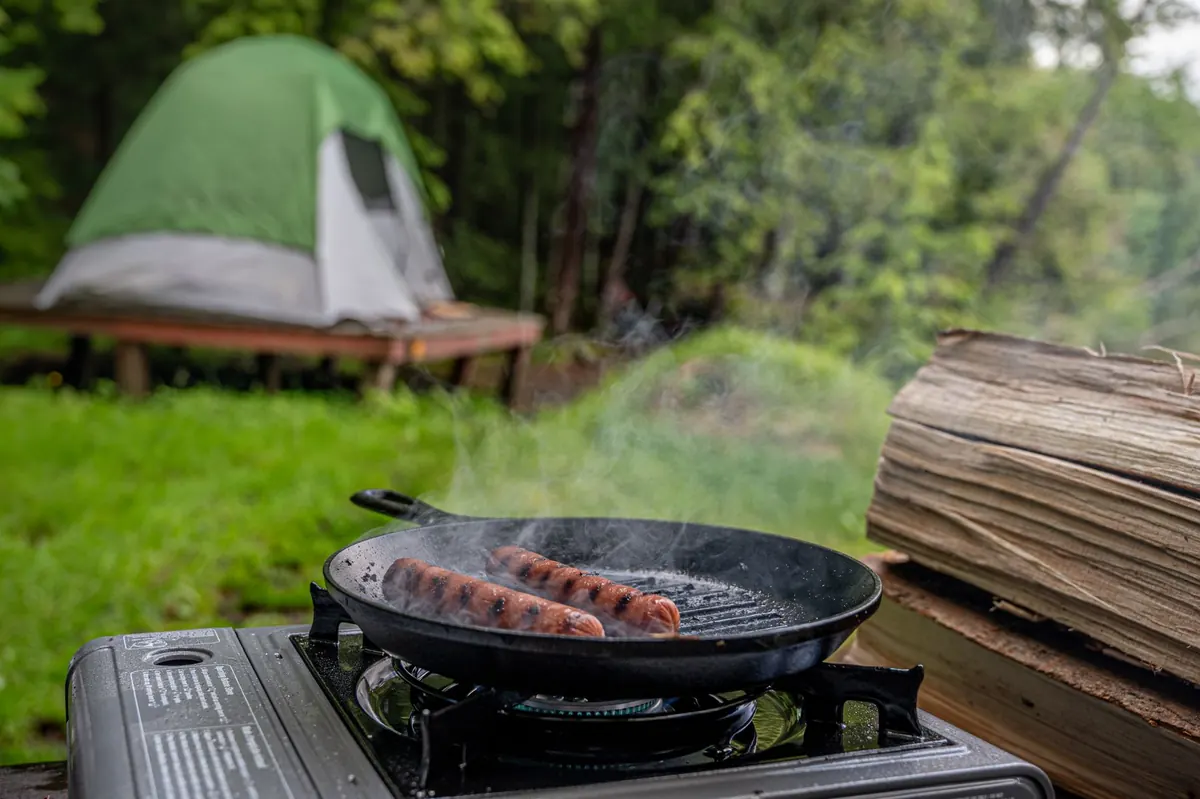
If you are planning a night on Dartmoor, read the park's current wild camping guidance before you travel rather than trusting forum posts, even recent ones. Fires and disposable barbecues are banned on the moor, and during dry spells the park adds further restrictions on stoves, so check the fire risk notices alongside the camping map.
The Lake District and the rest of the fell country
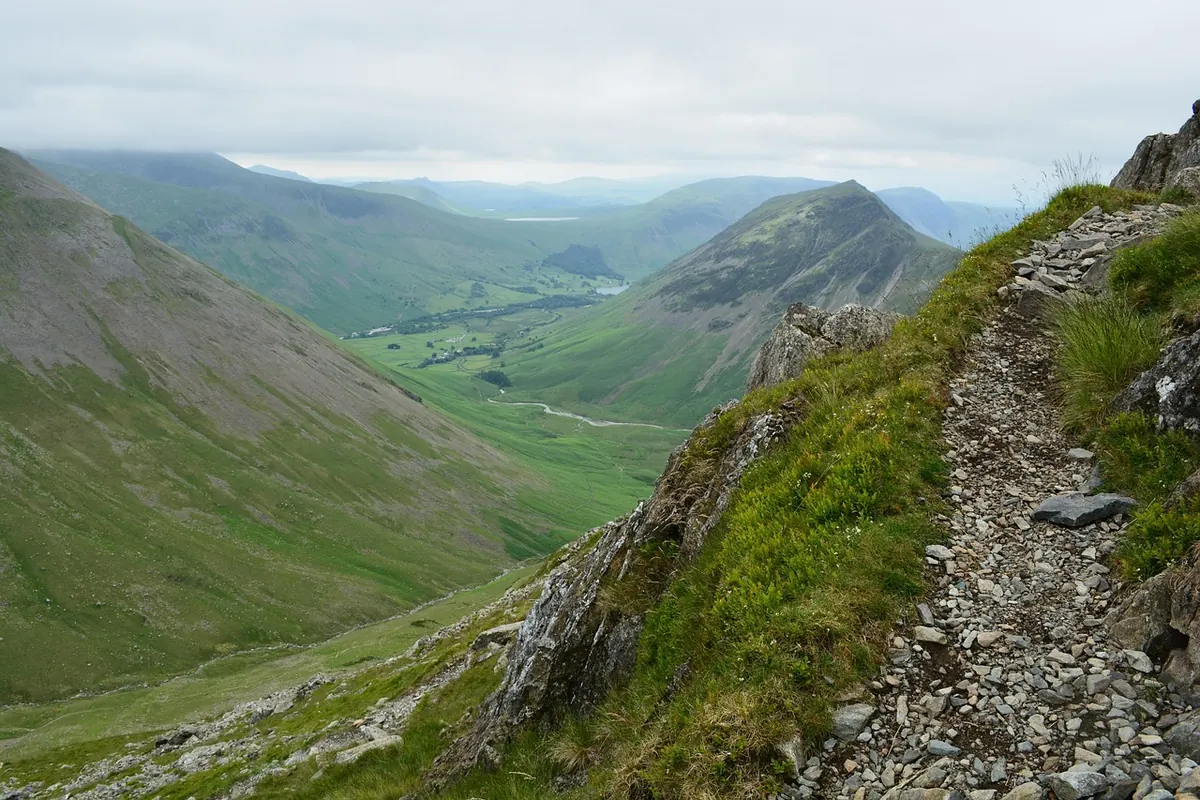
The Lake District has no legal right to wild camp anywhere. What it has is a long tradition of tolerance on high ground, which is a very different thing. Some landowners, the National Trust among the better known, turn a blind eye to a single small tent pitched high on the fells, above the highest enclosed fields, for one night only, arriving late and leaving early.
That tolerance is not a right and it is not uniform. Estates differ, some valleys are more sensitive than others, and a quick word with the relevant national park office or estate will tell you more than any online thread. The same applies in the Peak District, the Yorkshire Dales, the North York Moors and the hills of Wales: assume you need permission unless you have specific reason to think otherwise.
Where you can camp with permission
Asking is the most underrated skill in English camping, and farmers and estates are often more amenable than people expect, particularly if you explain that you are one person with a small tent, arriving after dark, gone by seven, and happy to pay. Other reliable routes include:
- Designated wild camping pitches and backpacker sites in national parks and forests, usually for a modest fee, with toilets, water and a marked pitch. Examples include the permitted pitches around Wasdale and Ennerdale in the Lake District, and the camping areas in some Forestry England sites.
- Certificated sites and small farm campsites, often listed by the Camping and Caravanning Club or independent guides, which take a handful of tents and cost little more than a pub meal.
- Camping barns, bothies and bunkhouses, which are not wild camping but give you a legal roof, a water tap and a dry place to sleep when the weather turns.
- Landowner permission: a knock on a farm door, an email to an estate office, or a polite request at a pub can turn a nervous trespass into a welcome overnight stay.
What happens if you are caught or asked to move
If a landowner or a warden asks you to move, the practical answer is to move. Trespass is a civil matter, so the police are unlikely to attend simply because you have pitched a tent without permission. If they do appear, it is usually because something else is going on: a fire, a locked gate, litter, noise, damage to a wall, or a confrontation that has already escalated.
That does not make defiance a smart strategy. An argument at 10 p.m. can turn a quiet night into a police incident and, worse, it can harden an estate's attitude for years. Pack up politely, apologise, and ask if there is anywhere nearby they would prefer you to go. Many farmers will point you to a corner of a field or a hard standing if you are calm and honest. If you are asked to leave, leave the pitch as you found it, take everything with you, and do not come back to the same spot the next night.
Wild camping survives on permission, not confrontation. The moment you argue with a landowner, you are not just losing one night; you are making it harder for the next person who asks.
Responsible wild camping: the rules that keep tolerance alive
The law is only half the story. The other half is the unwritten code that persuades landowners and park authorities to keep tolerating backpackers. It is not complicated, but it is easy to get wrong when you are tired, wet and hungry.
- Arrive late and leave early. A tent that appears at dusk and vanishes by breakfast is far less likely to cause alarm than one that sits in a prominent spot all afternoon.
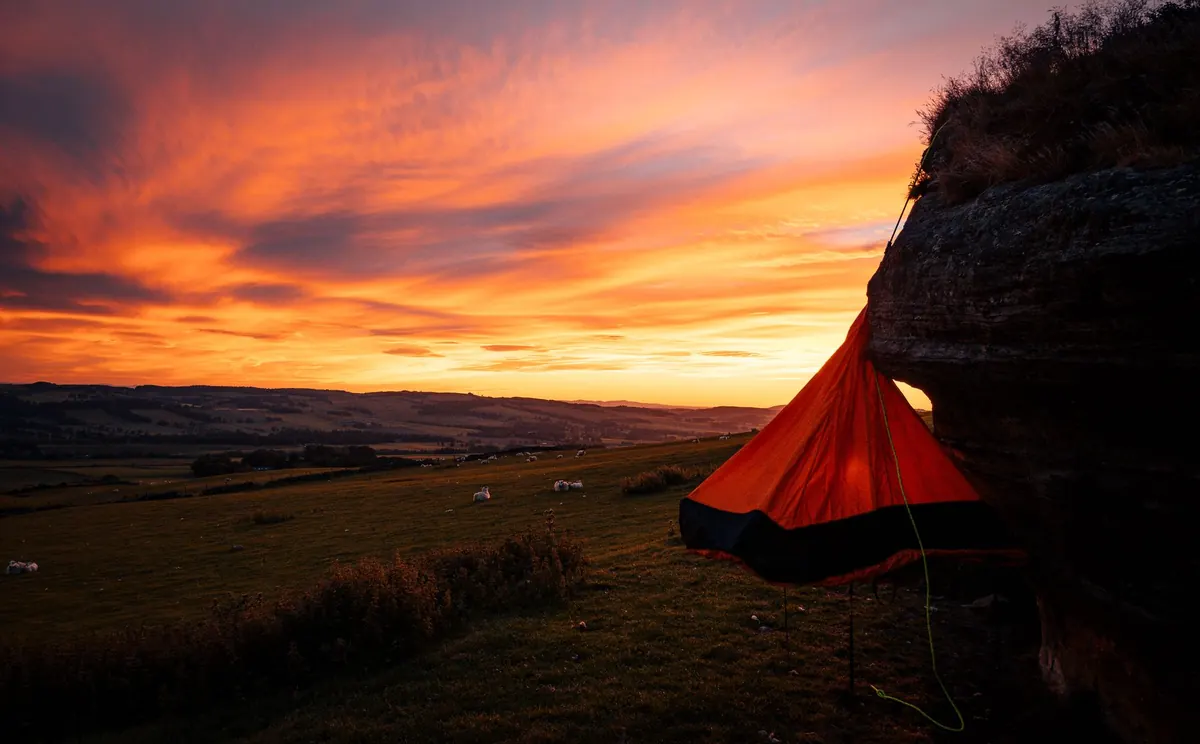
- Keep it small and discreet. Use a low-profile green, grey or brown tent. A giant family dome or a bright orange expedition tent on a skyline is not wild camping; it is a statement.
- Camp in ones and twos, not groups. One or two small tents may pass unnoticed. Six tents, a guitar and a fire will not.
- Leave no trace. Carry out all rubbish, including food scraps, tea bags, fruit peel and toilet paper. If you brought it
Photo: Zak Bentley / Pexels

You Might Also Like
A practical guide to planning a first three-day Lake District hike, covering route choice, realistic daily distances, beds, resupply and what to do when plans change.
Gas, liquid fuel and alcohol stoves each shine in different conditions. We compare weight, fuel availability, cold-weather performance and cost for British camping trips.